

How to Wash Printed Team Shirts So They Last
Turn the shirt inside out. Cold water, no softener, hang or low heat. Wait a day after the box arrives. That’s the wash tip we give Bay Area teams after pickup in Saratoga.
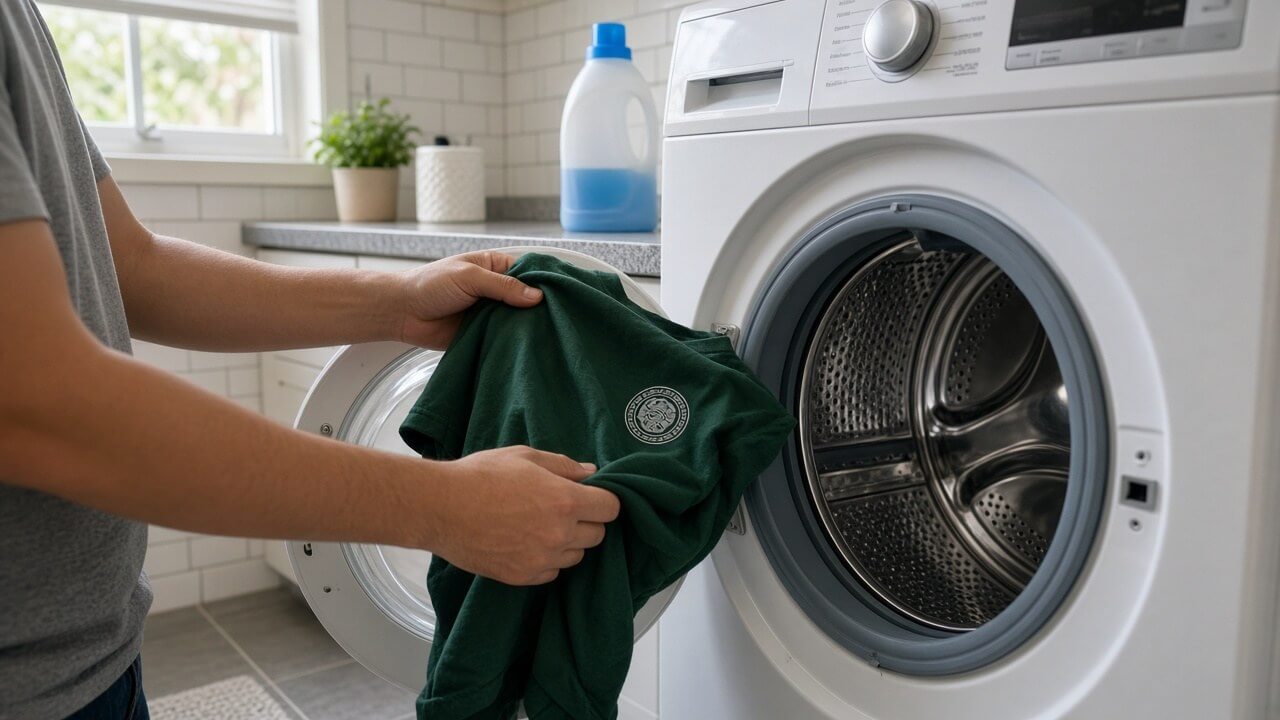
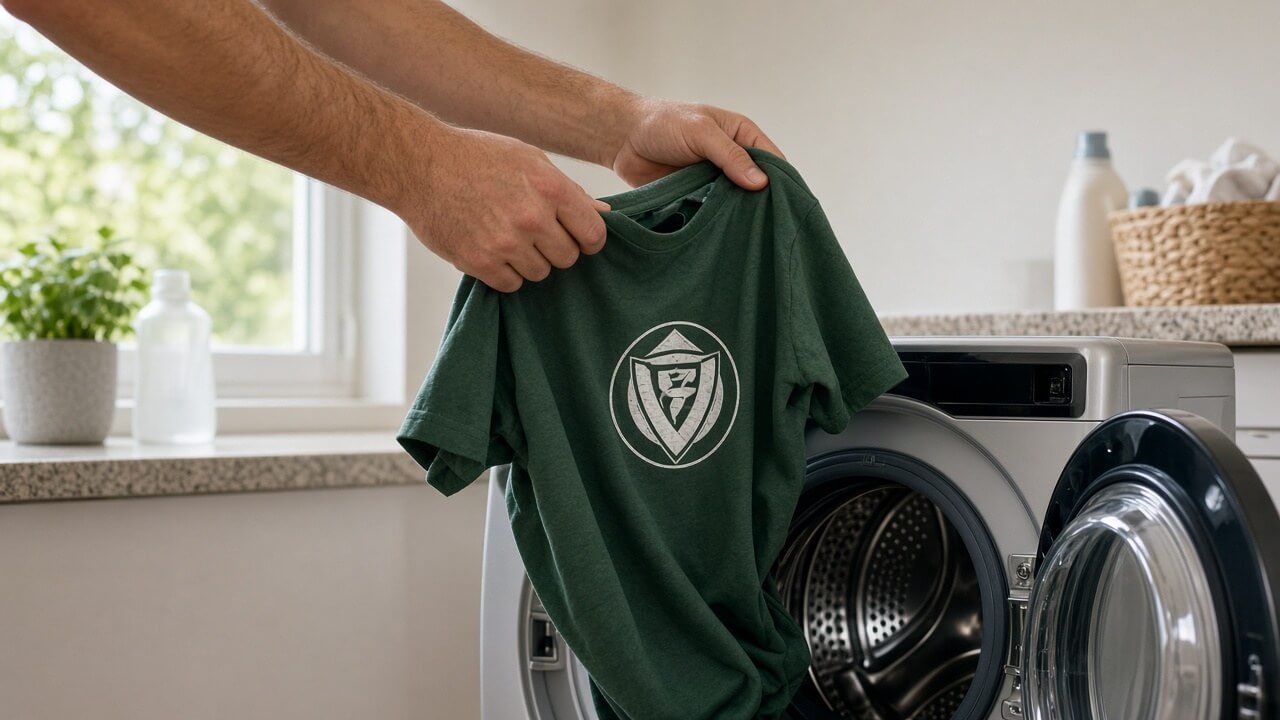
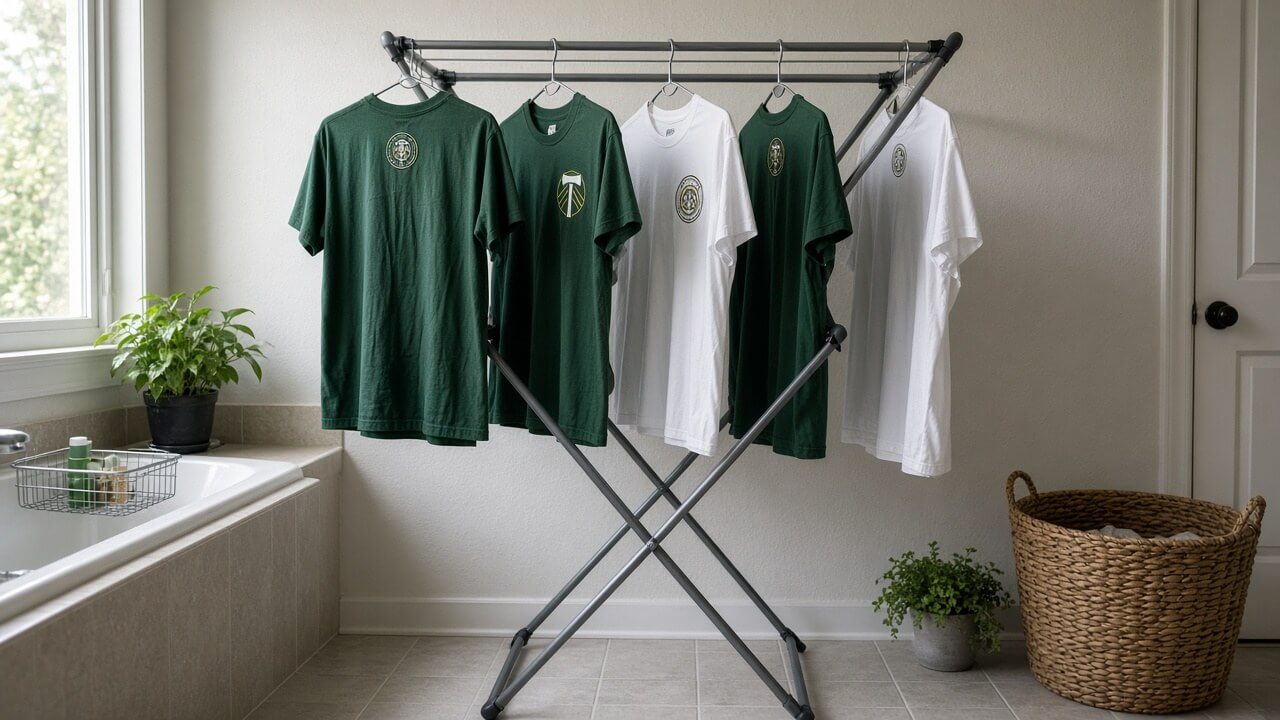
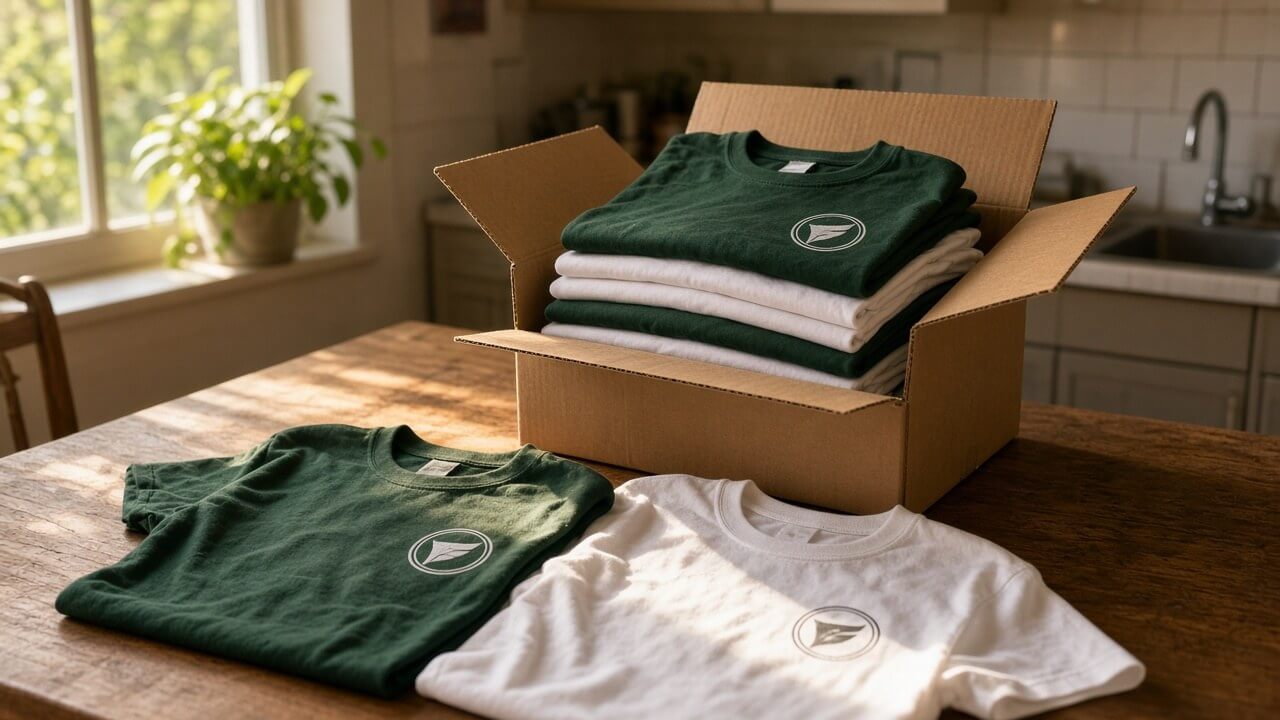
The routine, if you only have a minute. Turn the shirt inside out. Wash it in cold water on a gentle cycle with ordinary liquid detergent. Skip fabric softener and bleach. Hang it, or use the lowest dryer setting and pull it while it is still a little damp. Wait about a day after the box arrives before the first wash. That is the method. Everything below is why those habits matter on the shirts we print in Saratoga, and what to do when the weekend does not look like a care tag.
In this article
- The wash, in order
- Open the box before you wash
- Why inside out actually matters
- What quietly ruins a print
- Grass, clay, and sweat
- The dryer is the expensive shortcut
- DTF, embroidery, and different blanks
- A real team weekend
- If the print already looks wrong
- Paste this in the group chat
Most “how to wash a graphic tee” articles are written for one person and one favorite shirt. A team order is a different object. Twenty or sixty people will wash the same mark, in different machines, after games that leave clay on the hem. The captain who collected sizes is now expected to also collect laundry advice. This page is that advice, written the way we tell customers at pickup.
We decorate team tees, hoodies, and polos with DTF prints and embroidery. We do not sell a magic detergent. Prints last when you take friction, heat, and extra chemistry off the mark. They fail when the box hits a hot dryer the same afternoon, or when a grass stain gets treated like a white sock.
The wash, in order
Do the steps in this order. Skipping the first two is how a quality question turns into an argument a week later.
- Open the bag. Check the print, the sizes, and the count. Photograph anything that looks wrong. Once it has been through a machine, “it might have arrived like that” is harder to sort.
- Wait about 24 hours after delivery before the first wash. The print left our shop finished. The extra day is so the first trip through a drum is not the same day as a hot dryer.
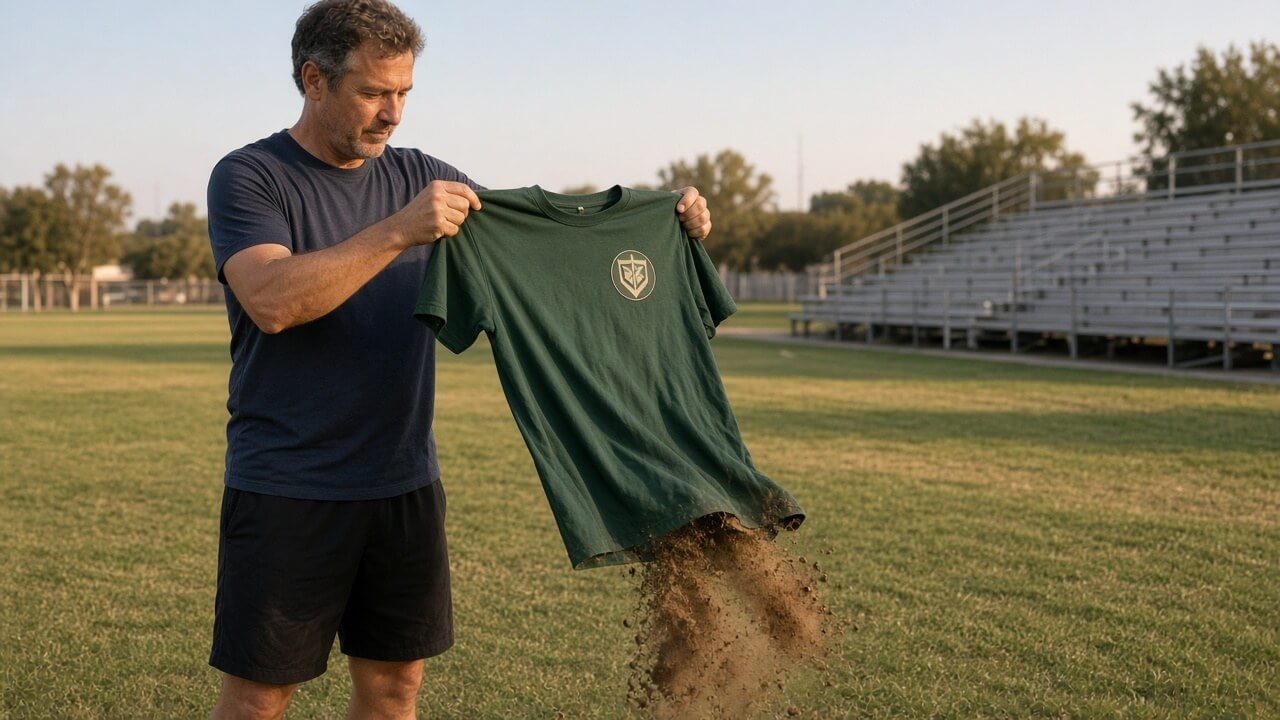
- Knock the dry dirt off outside. Shake it. Do not grind clay into the fibers in the machine. Treat the cloth. Leave the crest alone.
- Turn the shirt inside out so the print faces in. The washer should work the fabric, not use the art as a brush.
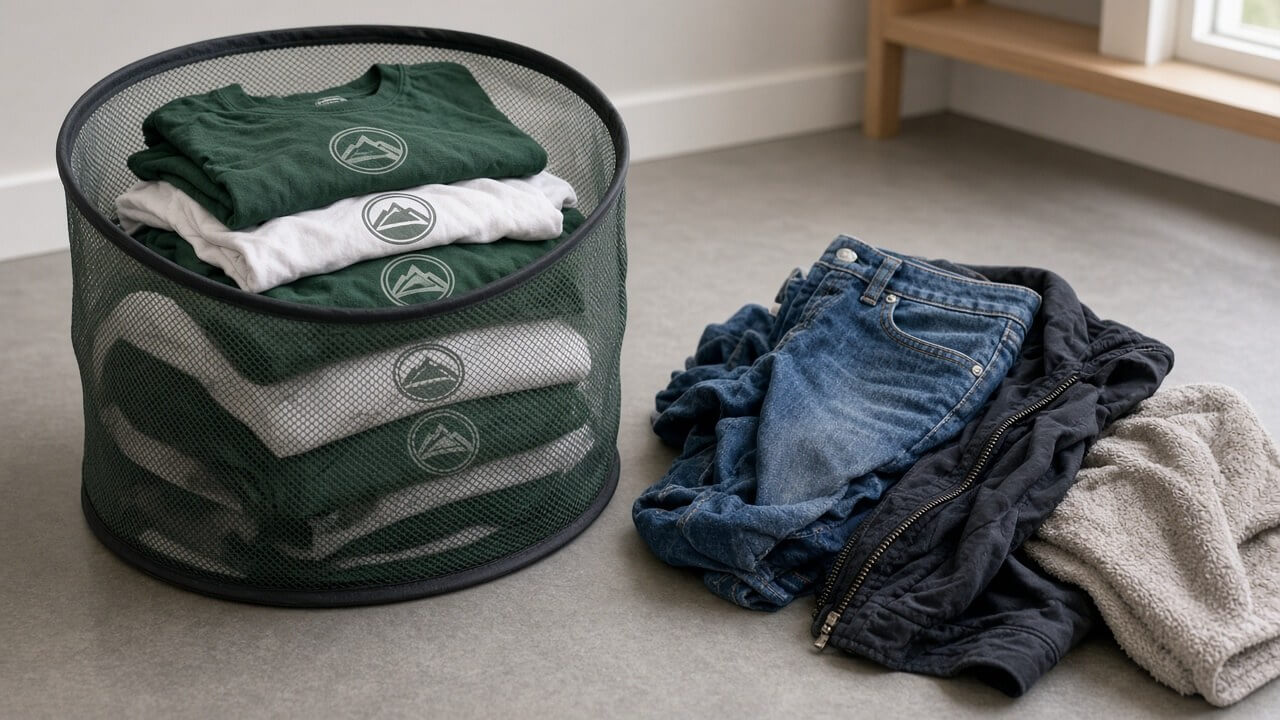
- Wash with other shirts. Keep zippers, velcro, jean rivets, and towels out of that load. One zipper pass can scuff a name on the back.
- Cold water. Gentle or delicate cycle. A small amount of regular liquid detergent. No fabric softener. No bleach. No “sanitize” or extra-hot cycle.
- Hang dry, or tumble on low and pull the shirt while it is still slightly damp. Finish on a hanger. High heat is how a fine jersey twists and a print goes brittle.
- Store it dry, folded print-in or hung. Do not pack damp tees into a bin at the end of the season.
Washer: Cold · Gentle. Regular liquid detergent. Half a cap is usually enough. Skip the extra rinse chemicals.
Dryer: Hang · or Low. Shared building machines often default to High / 40 minutes. That panel is for towels.
Open the box before you wash
Custom print is made to order. Wrong size, a roster that shrank, a change of mind: those were never returns. Production or quality mistakes are a different bucket. You have 14 days after delivery to tell us, and we look at the order and the approval.
If the print is missing, obviously flawed, or not what was approved, and you see that when you open the box, photograph it and write us before anyone wears it or washes it. A file that was already soft, or a normal small gap between a digital proof and a shirt, is not a defect. A cracked crest that showed up after fabric softener and a high dryer is not “it arrived broken.”
Two kinds of shirts, two rules. Unprinted blanks have to be unworn, unwashed, and tagged if you might return them. Custom print was never returnable for a size miss. Wash a blank first and decide later, and that door is closed.
How long to wait before the first wash
A lot of captains want to wash before Friday handout. That instinct is reasonable. Still leave a day. Same-day wash plus a hot dryer is the combination we least want, especially on a Bella 3001 or any other fine jersey.
If you are up against a Saturday morning game and the box arrived Friday afternoon, skip the dryer. Cold wash, inside out, hang it overnight. A damp shirt on a hanger beats a dry shirt that has been cooked.
Why inside out actually matters

Most print damage is mechanical, not a bad detergent. For thirty minutes the shirt tumbles against seams, buttons, and the drum. A print on the outside takes every hit. A print on the inside does not. Turn the shirt inside out so the mark is not the thing hitting the glass.
Youth sports loads are messy on purpose: socks, a towel, a jacket with a zipper, sometimes a pair of jeans. Keep printed shirts in their own load if you can. It feels fussy. It is cheaper than explaining in the chat why only one number scuffed.

What quietly ruins a print
Do
- Cold water, gentle cycle
- Ordinary liquid detergent
- Wash with other tees
- Hang, or low heat and pull early
- Iron from the back, off the art, if you must
Do not
- Fabric softener or dryer sheets
- Chlorine bleach on or near the print
- Hot water or a sanitize cycle
- High dryer, or a 40-minute building default
- Dry cleaning, or an iron pressed into the mark
Fabric softener is not a softness upgrade
Softener makes a shirt feel slick because it leaves a film. That film does not stop at the cotton. On a DTF print it works into the bond. After enough doses you get a tacky surface and edges that lift. On a moisture-wicking polo — Nike, Sport-Tek, OGIO, and the other performance knits we carry — it also clogs the finish that is supposed to move sweat.
If you want a shirt that feels soft, buy a softer blank. A 3001, a Comfort Colors 1717, a Bella fleece. Do not perfume a print into failing.
The bottle that says it removes spots
That sentence is written for fabric. It is not written for a crest. Keep chlorine, and most aggressive stain sticks, off the printed area. If you are guessing, wash the garment and leave the art alone.
Grass, clay, and sweat

Dark team colors plus lawn is a regular Saturday here. Hot water will not save the grass, and bleach will fade the shirt along with the stain. Shake what you can while it is dry. Pretreat the cloth around the print if you need to. Stay off the mark.
Sweat is ordinary detergent and a cold wash, not a high-heat “sanitize” cycle. If the shirt sat in a closed bag in a hot trunk after a Central Valley game, hang it and air it before it goes in any machine. A night in damp nylon does nothing good for smell or for the print.
The dryer is the expensive shortcut

Hang dry is the safe answer. A rack, a shower rod, or a balcony rail beats the building dryer on High. A lot of buildings around here have a panel that defaults to high heat, forty minutes, two households of laundry at once. Fine for towels. Rough on a printed tee, and worse on a 3001 than on a heavyweight blank. High heat makes a print brittle. It also finishes a collar early and can twist a fine jersey.
If you need the shirt Saturday morning: a short tumble on low, then a hanger, beats high until it is board dry. Do not save dryer money by cooking the shirt. You will not save enough to reorder, and a reorder still needs a new timeline.
Heat that is not the dryer
Do not iron the print. If you have to press wrinkles, go from the back, use a cloth, and stay off the art. Steam straight into the mark is not a workaround.
A shirt baked on a dashboard or a rear window picks up heat and sun the washer never gave it. Wash it right, then do not cook a damp shirt on glass on the drive home.
Dry cleaning is not the careful version of this. Solvents and a hard press are for jackets. A printed tee is a machine-wash garment. Wash it like a shirt you intend to keep.
DTF, embroidery, and different blanks
The core routine above covers almost everything we ship. The failure mode is what changes. Knowing which one you bought tells you what to watch for, not which detergent to buy.
| What is on the shirt | How it usually fails | Extra care |
|---|---|---|
| DTF print (most of our full-color marks) | Edges lift if heat, softener, or abrasion pile up | Inside out, cold, hang or low. Do not pick at a lifted corner. |
| Embroidery | Snags, not fade | Inside out. Never iron the stitches. Watch velcro in the same load. |
| Bella 3001 / other fine jersey | Heat shows up as twist and a tired print sooner | Hang dry whenever you can. This blank is not a towel. |
| Heavyweight cotton (PC61, Gildan, Comfort Colors) | Shrink and collar wear from heat; Comfort Colors can crock a little on early washes | Still cold. Wash garment-dyed colors with like colors the first few times. |
| Performance polo (Nike, Sport-Tek, OGIO, and similar) | Softener clogs wicking; high heat is hard on the knit | No softener, no dryer sheets. Hang dry. These dry fast on their own. |
Baby onesies, youth 3001Y, adult 3001: same rules. Finer fabric, less reason for high heat. Hoodies can go on low too. Still do not mash a print against a zipper.
A real team weekend
Two games on Saturday, shirts wet and muddy, another game Sunday. The useful version is still: shake the dirt, inside out, cold, short cycle, hang or a brief low tumble. If you cannot hang overnight, low heat to damp, then a hanger.
Do not run sixty shirts through the church or school machine that “does everything,” then finish on high. That machine is fine for tablecloths. It is not automatically kind to a print. Smaller loads at home beat one heroic industrial cycle.
If there are names or numbers on the back, glance at the print when you turn the shirt. A little lift at the edge: do not pick at it. Keep using cold, inside out, low heat. A piece that has already come away is not coming back with another stain stick.
Road games and hotel machines
If the hotel dryer only has High, rinse in the sink with cold water and hang it in the bathroom. Do not cook it so it is dry for 8 a.m. Get wet shirts out of the bag before they sit overnight.
When the season ends
Dry them. Turn them inside out. Keep them cool and out of the sun. Do not vacuum-seal a damp stack in a garage. If you will wear the same mark next year, storage is cheaper than a reorder. If you will not, give them away. Do not grow a smell in the damp and then blame the print.
If the print already looks wrong
Do not mix a quality issue and a wash issue in the same email. They are different problems and they need different facts.
| Looks wrong when you open the box | Looks wrong after laundry | |
|---|---|---|
| What it usually is | Production or quality. We look at the order and the approval. | Use and care, unless you already photographed a problem before washing. |
| What to do | Photos, write us within 14 days of delivery, do not wash yet. | Read this page first. Heat, softener, and zippers are the usual story. |
| What it is not | A reason to skip checking the count and sizes. | “It arrived broken, please replace,” after a hot dryer. |
The long version lives in the refund policy. Custom print is final sale except for our production or quality mistakes. Calling wash wear a misprint wastes a week for both of us.
Paste this in the group chat
Captains: you do not need to forward this whole article. This block is the version that survives iMessage.
Wait a day after they arrive. If a blank might be returned, do not wash it.
Inside out. Cold water. Regular detergent.
No fabric softener. No bleach on the print.
Hang dry, or low heat and pull them early.
Do not iron the art. Do not bake a damp shirt on the dashboard.
Wrong print or a short count when you open the box: photos, write Creative 8 within 14 days, before you wash.
Cracks after heat and softener: that is laundry, not a reprint.
Questions we get after pickup
Can I wash the shirts before Friday handout?
Yes, after about a day. If the box arrived the afternoon before the event, skip the dryer and hang them. Do not wash unprinted blanks you might still return.
Our building dryer only has High. Now what?
Do not use it for printed shirts. Hang them on a shower rod, a balcony rail, or a drying rack. In this climate they are usually wearable by morning. If you must use a machine, find one with a Low setting, keep the time short, and pull them damp.
Can fabric softener go in the same load if I am washing other clothes too?
No. If the printed shirts are in that drum, skip the softener for the whole load. Wash the towels separately if someone in the house refuses to give it up.
How long should the print last?
Long enough to finish a season and still look like the team in photos, if you keep heat and extra chemistry off it. We do not sell a round number of perfect washes. Application sets the ceiling. Laundry decides whether you get there. When a print fails in the first handful of washes, it is almost always application or care — not bad luck.
The edge of a name is starting to lift. Can I glue it?
Do not pick at it, and do not put household glue on a shirt. Stay on cold, inside out, hang dry. A piece that has already come away will not press itself back on in the next cycle.
Is this the same advice as the Care page?
Yes. The Care page is the short list. This article is that list in the situations Bay Area teams actually have: shared dryers, two-game Saturdays, grass, and the difference between a quality problem and a wash problem.
These shirts are going to get sweated in, photographed, and washed by people who did not place the order. Give them the five-line version in the chat, wash them like ordinary tees you intend to keep, and the mark has a better chance of finishing the season.
Need the shirts themselves? Standard Team Order if one person is paying. Group Store if everyone picks a size and pays. Sizing, files, and calendars are in Tips for Ordering Custom Team Apparel.
Next Steps
Ready to order or need to double-check the rules? Head to these pages.